LinkedIn Ads for B2B Startups

LinkedIn Ads for B2B Startups provide one of the most reliable ways to generate qualified leads, build brand credibility, and reach decision-makers directly. For early-stage companies, where every marketing euro must deliver measurable impact, LinkedIn is not just a channel but a strategic growth engine.
In this article, we explain why LinkedIn Ads are essential for B2B startups, how to create campaigns that work, and how to integrate them into a wider performance advertising strategy.
Why LinkedIn Ads for B2B Startups Matter
LinkedIn Ads for B2B Startups refers to running paid campaigns on the world’s largest professional network to reach target buyers. According to HubSpot, 80% of B2B leads generated through social media come from LinkedIn.
For early-stage startups, the advantages are clear:
- Direct access to decision-makers → Unlike other platforms, LinkedIn allows targeting by job title, seniority, company size, and industry.
- High-quality lead generation → Leads are often further along in the buying cycle.
- Brand positioning → Appearing in a LinkedIn feed builds trust and authority in niche industries.
LinkedIn Ads may not always be the cheapest in terms of CPC, but the quality of engagement makes them uniquely suited to B2B growth.
LinkedIn Marketing Strategy for Startups
A LinkedIn marketing strategy is the structured plan that helps startups align campaign objectives with growth goals.
Key elements include:
- Objective setting → Choose between brand awareness, website visits, lead generation, or conversions.
- Audience targeting → Use LinkedIn’s filters to narrow by role, skills, industry, company headcount, or geography.
- Campaign structure → Start with broad awareness campaigns, then move to retargeting and lead-gen forms.
- Budgeting → LinkedIn CPCs average €4–8, so a realistic starting budget is €1,500–2,000 per month for early-stage tests.
- Content alignment → Ads should link to thought leadership content, lead magnets, or demo sign-ups.
Pro Tip: Use LinkedIn Insight Tag to track conversions and build remarketing audiences, even from early traffic.
Best Paid Social Campaigns on LinkedIn
Paid social campaigns on LinkedIn can be highly versatile. The main ad formats include:
- Sponsored Content → Appears natively in the feed, great for thought leadership and awareness.
- Message Ads (InMail) and Conversation Ads → Direct messages with a personalised feel, ideal for B2B offers.
- Dynamic Ads → Automated personalisation, such as showing the user’s name or company.
- Lead Gen Forms → Pre-filled forms within LinkedIn, improving conversion rates by reducing friction.
Example: A SaaS startup offering cybersecurity solutions could run Sponsored Content targeting CTOs in mid-sized European companies, offering a whitepaper download in exchange for contact details.
Best practices for creative:
- Focus on value exchange (what the lead receives in return).
- Keep messaging short, authoritative, and professional.
- Avoid generic stock imagery; use real product screenshots, team photos, or branded visuals.
Startup Growth Marketing with LinkedIn
Startup growth marketing is the process of combining paid, organic, and product-led tactics to accelerate customer acquisition. LinkedIn plays a unique role for B2B startups because it:
- Serves as a top-of-funnel thought leadership platform.
- Delivers mid-funnel lead generation through gated content or demos.
- Integrates with lower-funnel channels like Google Search or Meta retargeting.
For early-stage companies, the smartest approach is not to rely solely on LinkedIn but to make it the centrepiece of a multi-channel growth engine. This ensures leads are nurtured across different touchpoints.
Callout: LinkedIn Ads combined with Google retargeting campaigns provide one of the strongest pipelines for B2B startups.
Performance Advertising on LinkedIn
Performance advertising is about optimising campaigns for measurable ROI rather than just impressions. For LinkedIn Ads for B2B Startups, this requires:
- Implementing LinkedIn Insight Tag → For tracking website actions and conversions.
- CRM integration → Syncing leads directly into HubSpot or another CRM.
- A/B testing → Experimenting with different headlines, offers, and creatives.
- Audience layering → Narrowing down targeting to reach only the most relevant users.
- Scaling responsibly → Increase spend gradually, monitoring cost per lead and sales pipeline contribution.
Startups that approach LinkedIn Ads as performance advertising channels — not just brand plays — will see compounding returns as campaigns mature.
Try Our Ad Campaign Pack
We manage your ad campaigns across LinkedIn, Google, Meta, TikTok, and YouTube with strategy, creative production, and performance optimisation. Our focus is on helping startups generate qualified leads without wasting budget.
Your first 14 days are free.
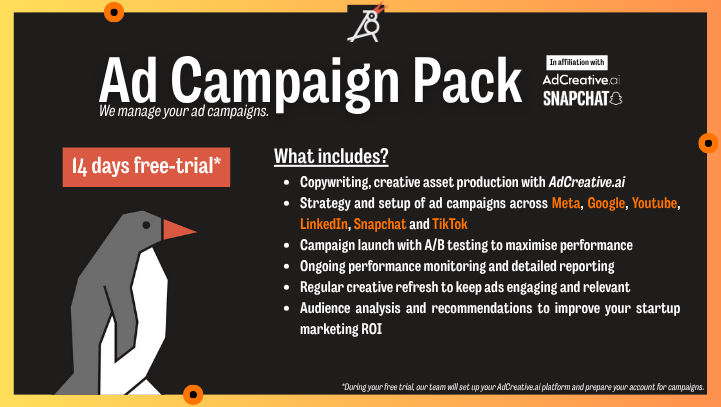
Then €1690.90 per month
Final Thoughts
LinkedIn Ads for B2B Startups are not optional in today’s growth playbook. They deliver targeted access to decision-makers, drive measurable lead generation, and build long-term brand authority.
By adopting a structured LinkedIn marketing strategy and applying performance advertising principles, startups can achieve predictable pipeline growth and maximise every euro spent.
Frequently Asked Questions
Are LinkedIn Ads too expensive for startups?
They can be more expensive than Meta or TikTok, but the quality of leads often justifies the cost.
What is the minimum budget to run LinkedIn Ads?
A realistic starting point is €1,500–2,000 per month to gather meaningful data.
Which LinkedIn ad formats work best for B2B startups?
Sponsored Content and Lead Gen Forms are the most effective for early-stage companies.
How do LinkedIn Ads compare with Google Ads for lead generation?
LinkedIn is stronger for targeting specific decision-makers, while Google captures active intent. Together, they form a complete funnel.
Related Reading

🤝 Bulbul is an official partner of AdCreative.ai, strengthening our expertise in AI-powered ad creation and campaign management for startups and fast-growing teams.
Comments are closed.